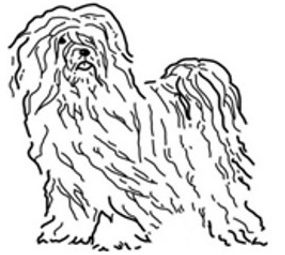
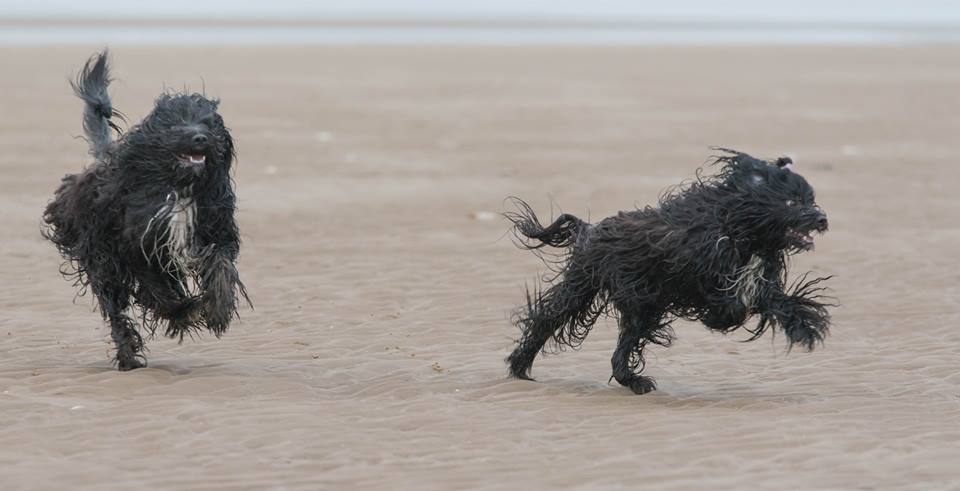
The Tibetan Terrier is a healthy and robust breed of dog, with an endearing nature and willingness to please. They have few health problems. Originating from Tibet where there are extremes of weather and terrain, they had to be a healthy breed to thrive. In Tibet they worked as herding animals. On narrow paths they would skip over the backs of the stock to gain the best position to carry out their work. There are tales of them being used to retrieve dropped items from the mountain sides, showing their agility and intelligence. They were also guard animals, they would raise the alarm, by barking, but would have to wait for the Tibetan Mastiff to arrive and carry through the threat.
They do have health issues like any pedigree, cross-breed, or multi breed dog. However, diligent and responsible breeding over the past 50 years in the UK have lead to these being minimal. The founder club has kept health records since its inception. Now the TTBOC along with the TTA work very closely together to promote healthy dogs and sensible breeding practices. The breed standard for the Tibetan Terrier has always stated that they should be without exaggeration and this can only support the breeding of healthy animals.
The breed clubs have been supporting the Animal Health Trust (A.H.T.) in its work to produce D.N.A. tests for hereditary conditions and congratulate them on the tests for Neuronal Ceroid Lipofuscinosis (NCL) and Primary Lens Luxation (PLL), two forms of Progressive retinal atrophy, these are classified as RD4 and PRA3, and Pituitary Dwarfism (DP-LHX3). These tests are currently available from the AHT and several other independent DNA testing centres. Pituitary Dwarfism is relatively knew to the Tibetan Terrier breed. Please see the Joint Health Statement that has been issued by TTBOC and TTA for more information.
For more information on any of the test previously mentioned please go to the testing page on our site.
Breeders today are encouraged to test for all five of these conditions, except where the dog is already proved to be hereditarily clear of the condition.
We also hip score our breeding dogs for Hip Dysplasia via an x-ray at 12 months or over. Although there is believed to be some hereditary element to hip problems, there are other issues that may influence hip development such as diet, exercise, and injury. Currently the breed average score is around 12 and it follows that the lower the score the better the hip joint. The score ranges form 0-106.
All breeders should carry out annual eye testing of their breeding Tibetan Terriers via the recognised B.V.A. scheme.
In addition breeders will look at inbreeding co-efficient and estimated breeding values when choosing mating pairs.
However, to put things into perspective of all the animals bred there are few reported incidents of clinically affected animals for any of the conditions mentioned and with careful breeding these numbers will reduce again. Like any living beings, Tibetan Terriers can suffer injury. Together with the wear and tear of old age, other illnesses such as cancer, diabetes, thyroid problems and a few other conditions, have been presented but certainly in no exceptional numbers.
There are no laws in place governing the health tests that breeders carry out. The TTBOC would encourage you to purchase puppies from adults that have had a minimum of the scheduled tests for Tibetan Terriers under the K.C. Assured Breeders Scheme, whether or not they are members of the scheme.
The Kennel Club website has a wealth of information for those wishing to purchase a puppy of any breed, and also for breeders of dogs.
If you would like further information on any of the above please contact any committee member whose details are on the committee page.
Updated June 2024
In addition to testing relevant to the Tibetan Terrier Breed we also like to support other initiatives that are happening that looking related illness in canines in general. Below you will see a Heart Survey that we would encourage as many as possible to support with information.
Survey on heart conditions
- To complete the survey, please visit: https://www.surveymonkey.com/r/WL3ZLP3
The survey takes up to 10 minutes to complete and is open to all dog owners – even dogs that have never been affected by heart disease. The survey will be managed and results collected by The Kennel Club. All personal information given will be kept confidential and be presented anonymously.
 Tibetan Terrier Breeder and Owners Club